








In gaming parlance, to “platinum” a game means to earn all of its achievements. It comes from the PlayStation systems, where achievements are represented using trophies which vary in quality, with the platinum trophy only able to be earned by acquiring all other trophies. I’ve never been a PlayStation user, but the term has nevertheless been in my lexicon basically since the trophy system was released. People make “platting” games a standalone goal; it’s the ultimate collectible, and they make for good bragging rights when talking about a game.
So why, then, have I never earned all of the achievements a game has to offer before now, even though I’ve been playing video games for longer than I can remember? To put it plainly, I think most games include achievements that are just work for the player to go through. The achievements largely aren’t fun to earn because they, often by design, take an absurd amount of time to earn. As a recent example (although it comes from a game without an achievement system), the two most recent entries to the Legend of Zelda franchise (Breath of the Wild, Tears of the Kingdom) both include collectibles of which there are 900 and 1000 respectively. The reward for enduring the tedious collection process? It’s implied to be a pile of shit, Nintendo’s clever nod to the fact that these die-hard collectors aren’t playing the game as it’s intended to be played. Games whose achievements are solely grueling to earn miss the point of being a game at all: to build a system that encourages its players to have fun.
I should make it clear, though, that I’ve never frowned upon the people that go through this collection process. As silly as I sometimes think it is, it’s undoubtedly an impressive display of commitment, and I recognize that for them it is generally fun. My “collector’s anxiety” isn’t nearly as strong as many gamers’ is.
With all of that said, what changed for me? To put it succinctly, I rekindled my obsession with 2023’s Game of the Year. As I’ve begun replaying it once again, it’s time I gave it a bit of review, and dive into why it inspired me to accomplish a gaming feat I’ve never found worthwhile in any other game.
2023’s Game of the Year, and a strong contender for my favorite game of all time, Baldur’s Gate 3 is a tactical, story-rich experience that’s unrivaled in its breadth.
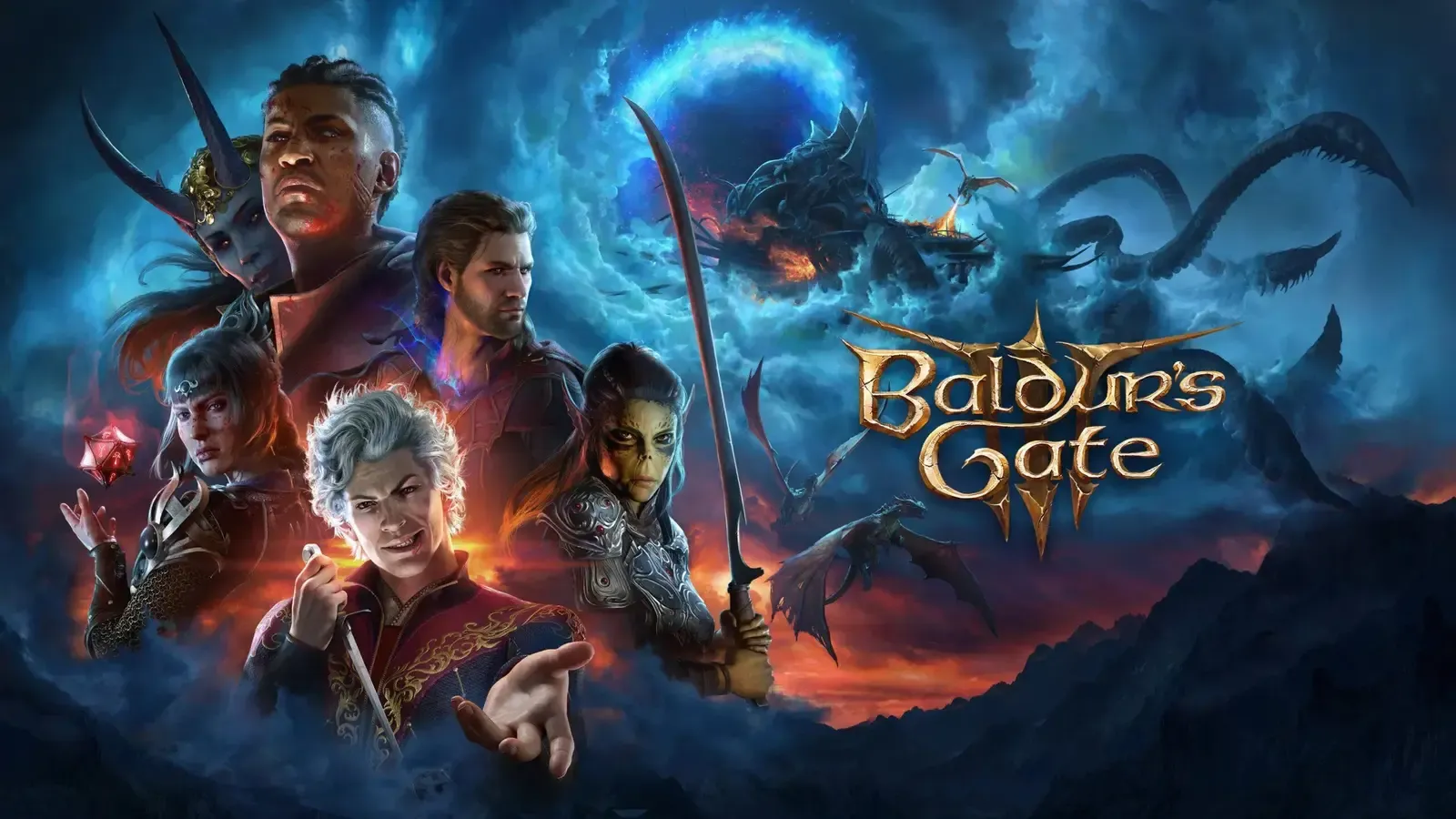
Baldur’s Gate 3 needs no more praise than it’s already received — though it’s certainly still deserving. Just over two years since its release, I’ve completed 3 full start-to-end playthroughs, and a small handful of partially finished efforts as well. That’s a notable fact by itself; it’s fairly rare for me to replay games I’ve beaten, let alone finish those subsequent playthroughs. The game’s replayability comes from the massive breadth of experiences it delivers through its massive web of narrative choices. To highlight just how diverse individual experiences of the game can be, let’s examine my most significant campaigns:
| Campaign | Difficulty | Hours Played | Party Slot 1 | Party Slot 2 | Party Slot 3 | Party Slot 4 |
|---|---|---|---|---|---|---|
| First Time | Tactician | 100 (Complete) | Dragonborn (Druid 12) | Shadowheart (Cleric 12) | Wyll (Warlock 12) | Lae’zel (Fighter 12) |
| Multiplayer w/ 3 Friends | Tactician | 108 (Complete) | Tiefling (Wizard 12) | Half-Orc (Paladin 6, Cleric 6) | Half-elf (Monk 12) | Duergar (Ranger 12) |
| The Dark Urge (1) | Honor | 45 (Reached Act 3) | Human (All Classes 1) | Astarion (Bard 9) | Lae’zel (Cleric 9) | Minthara (Paladin 9) |
| The Dark Urge (2) | Honor | 71 (Complete) | Half-elf (Bard 10, Rogue 1, Warlock 1) | Halsin (Cleric 6, Druid 6) | Astarion (Warlock 12) | Karlach (Barbarian 8, Fighter 4) |
| (Modded) Multiplayer w/ 2 Friends | Custom (Honor) | 26 (In Progress) | Half-Orc (Druid 5) | Drow (Rogue 4, Warlock 1) | Tiefling (Warlock 5) | Karlach (Barbarian 5) / Lae’zel (Paladin 5) |
You can see in the party composition that the game, by virtue of building upon the Dungeons and Dragons 5e ruleset, exposes an incredible breadth in how to approach things. And even after nearly 4 complete playthroughs, out of all of the characters that can join your party, I never finished a game using 3 of them (though I did complete their quests at least once each). There is so much to this game I could play it 4 more times and still not see it all.
All that said, breadth is not the most notable part of Baldur’s Gate 3. Instead, its crowning achievement is that it delivers narratively interesting, player-choice rewarding experiences nearly uniformly throughout its massive breadth. While I experienced the same core plot 4 times over, its presentation was still, at times, quite different. I was first a benevolent hero, then a self-centered adventurer who saves the world for personal gain. Then I acted as a repentant villain, and finally I embraced the “dark urge” within without remorse. My party composition varied wildly in response to my choices, as characters showcase their own moral compass and leave if you make choices they object with. The game, at nearly every beat, reacts with depth to your choices. At least in games I’ve played, that’s a unique accomplishment.
Some modest spoilers for some of the achievements may be found below.
There is so much more praise I could give this game, but my real focus is on its achievement system. Like many other games, Baldur’s Gate 3, in my impression, divided its 54 achievements into four main categories:
- Plot-based, achieved by progressing through the main quest or other highly-emphasized, hard-to-miss portions of the game
- Challenge-based, aimed at more experienced players, generally requiring players to defeat bosses in uniquely difficult ways, finishing the game on its highest difficulty settings, or otherwise engaging with challenging optional content
- Narrative-based, in Baldur’s Gate 3’s case, being mostly from finishing companion quests or romance-related quests
- Novelty-based, the types of achievements that almost uniformly aren’t difficult to achieve, but ask players to approach the game in novel ways, try different character builds, etc.
When I decided to jump in for my fourth playthrough, where I would get the remainder of the 54 achievements I needed, my original aim was only to experience the ending I hadn’t seen; an unrepentant Dark Urge, come to conquer the world for Bhaal. But as my attention shifted to the achievements themselves, realizing how close I was, it was mostly the challenge- and novelty-based achievements that enticed me.
One of my outright favorite achievements in the game was Jack-of-All-Trades. When I started my 3rd playthrough, I thought I was crazy to combine the Honor Mode ruleset with this achievement. Surely a character who takes only 1 level of each class would be far too weak to hold up to the demands of combat! Instead, I found that it actually turned the early game into a bit of a puzzle, finding clever ways to make use of 2 main stats (dexterity and wisdom) and to boost my AC / hit point pool as much as possible (e.g., draconic sorcerer + high dex + druid). The build naturally progressed from there, though the illithid “displacer beast shape” and Dark Urge “Slayer” form were probably the two biggest power spikes later on.
Another fun challenge-based achievement is A Grym Fate. There’s a well-known way to cheese the achievement, but I opted not to use that strategy. Instead, I armed my (slightly over-leveled) barbarian friend, Karlach, with a war hammer and went to town, using the remainder of my party to kite the golem and keep Karlach alive.
Only two achievements were so difficult to reach that they frustrated me, and made me question why I’d set the goal of getting them all: Crash Landing, and First Blood. In retrospect, I’m not sure why I found First Blood so difficult, but it nearly had me lose my Honor Mode run – the combat went sideways, and I only escaped for a re-try by using all of my spell slots to misty-step away and leave the encounter room. Crash Landing, however, is a nightmare. It’s one of the buggiest fights in the game to begin with, and decidedly lethal should something unexpected happen. Add on top the Honor Mode ruleset and the sheer difficulty of the achievement (doing damage to the dragon mid-flight is made extremely difficult due to a protective aura it gains), and for a few hours, I remembered why “platting” games is a fool’s errand.
But in the end, I prevailed, and I learned something about myself in the process. I like experiencing games in the way its creators intend. When I can sense the game pushing me in a specific direction – when I can see the design behind the game – I like to blindly stumble that way and get that “intended” experience. Baldur’s Gate 3, though, is an interesting case. Because the game is so open-ended and so rewarding of player agency, it’s uncommon to find those moments where the game really wants you to make a specific choice – it pushes you in multiple directions, as if asking you to play it multiple times.
Why replay the game? On its surface, the game suggests you replay it to experience the other narratives it can support. But those narrative differences, while extremely well-crafted, don’t provide the momentum you might need to go through the same set of combats multiple times to get to the narrative beats. Instead, the game’s achievement system does. Why go fight this boss again? Do it to experience the other sides of the game’s mechanical depth, to see a more cinematic encounter, or so on.
The two-sided push to encourage players to carry forward, is, I think, what captivated me to spend over 400 hours playing. I’m playing the game again now, despite having already completed all of the big narrative choices and the achievements, and I’ve noticed feeling just a little less inclined to repeat the same things over again. This time, though, I’m playing with some dear friends once again, and just like a true TTRPG, Baldur’s Gate 3 allows me to get my joy by experiencing a rich, realistic world with my friends. And this time, I can share with them some of the special moments I would never have found without earning my first platinum trophy.